

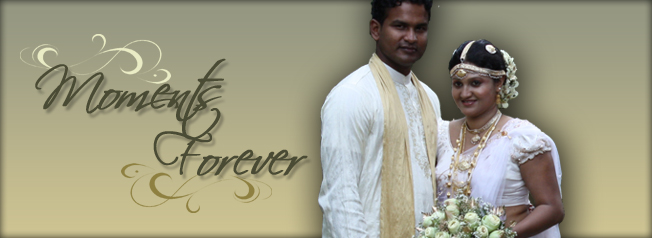
Sri Lankan Wedding Formations
Church Weddings PDF Print E-mail
Written by Sri Lanka Wedding Portal   
Tuesday, 22 November 2011 14:58

Church weddings are conducted by christen people in a Sri Lanka who prefer to begin their new life with blessings of their gods. Almost all the rituals in such weddings take place in the church and these are associated with the holy mass conducted by the priest of the church. If the couple believes in two religions, then a mix wedding is conducted including both church wedding and Poruwa ceremony.

The bride and groom enter the church separately with their parents and relations. The church can be decorated to match with the colures and themes of the entire weddings. The couple gets married in front of their priest and two witnesses from both side sign the marriage and, the priest play the role of an intermediate witness. The exchange of wedding rings also takes place in this moment. The priest prays requesting protection from the god for the newly wedded couple and read a part of 'bible' offering further blessings. After all these rituals, the guests are treated with food and beverage. Also, the couple can conduct a separate function in a wedding reception hall according to their personal preferences.

 
Hindu Weddings PDF Print E-mail
Written by Sri Lanka Wedding Portal   
Tuesday, 22 November 2011 14:56

Hindu wedding is another wedding formation which can be observed in Sri Lankan culture. The establishment of Hindu weddings dates back to 4000 years and it is guided by many Hindu rituals which clearly depicts interdependence and the complementary nature of husband and wife relationship.

Melting of gold which is also known as Ponnurukku is a significant ritual in Hindu weddings which take place few days prior to the wedding. Molding the Bridal pendant (thaali) at the family goldsmith is attended by the groom and his family members in this day and bride does not participate in this event. During the same day cuttings from Bo Tree, Banyan Tree, and Margosa Tree are planted in the homes of the couple and this ritual is known as Kanni kaal planting.

The marriage of the bride and groom take place in (Mantapam/Medai). It is a canopy of wedding platform which has been auspiciously ornamented. During the ceremony, the father of the bride entrust his beloved daughter to the companion of the groom and groom promise to take care of her for ever.

At an auspicious time Tholan, the brother of the bride who plays the role of best man in the ceremony goes to groom's house with three or five wedded couples. A senior member of groom's family places Turban (thalaipa) on his head and he is accompanied to the wedding hall by groom's family members and relatives. And this ritual is known as Maapillai Alaippu

After the groom arrives the hall the wedding ceremony begins. At the entrance of the hall the groom is welcomed by bride's parents and relatives by placing him a flower garland. Bride's maid who is the grooms married sister, bears at tray with the bridal out fit Necklace and other gifts while two other ladies will bear a tray each with coconuts on one and sweet meats and flowers on the other.. This ritual is known as Maapillai Varavetpu.

The ceremony includes lot of blessings to the gods asking the god to save the couple from obstacles and misfortunes After conducting some of the rituals and blessings, bride is accompanied by her bride's maid (Tholi) flower girls and her family to the wedding ceremony. The groom then joins the bride at the manavarai and sits on the left and the main ceremony begins.

Tying wedding necklace plays a vital role in Hindu weddings. The couple exchange garlands for three times and feed each other with milk and fruits. This ritual symbolizes sweet and eternal partnership between each other. After that, the couple salutes the cow because in Hindu religion cow is a symbol of wealth. Couple takes the hand of each other and goes around fire. In Hindu marriage the couple promises to each other seven virtues including on going eternal, mutual commitment of nourishment, moral support and strength, chastity, happiness in parenthood, commitment, cherishment friendship, respect and love.

 
Buddhist Weddings or Poruwa Weddings PDF Print E-mail
Written by Sri Lanka Wedding Portal   
Tuesday, 22 November 2011 14:56

The embryonic form of the Buddhist Weddings could be found as far back as to 300 BC and it is highly influenced by the Buddhist culture. Today, Buddhist weddings which take place in Sri Lanka is based on up country and low country customs. All activities of such weddings take place according to auspicious times or 'nakath' which is created based on the date of birth and time of the bride and groom.

The 'Poruwa', a decorated platform is the main feature of Buddhist weddings and all the rituals throughout the ceremony take place on this plat form. Poruwa ceremony is the most vital feature of a traditional Buddhist wedding. Normally, Poruwa is made of wood and it is decorated by fresh plants, leaves and flowers. And also, 'pun kalas' are placed in front of Poruwa which symbolizes prosperity. Today, floral designers make this elegant to match with the entire wedding theme, colours and personal preferences of the couple.

The couple enters the place where the poruwa ceremony takes place with their parents and close relatives. After that, each of the couple is elevated on to the 'Poruwa' by one of their uncles at an auspicious time. 'Poruwa' rituals invoke blessings of god and triple gem to the newly married couple. At the poruwa ceremony, the couple exchanges seven bundles of betel leaves requesting god for protection. The small fingers of the couple are tied by a golden thread and holy water is poured and this ritual symbolizes bond and unity of the couple forever. The ritual of exchanging of the rings and the groom tying the wedding necklace and draping the sari and jacket on bride also take place during this Poruwa ceremony. There is a special ritual called 'Kirikada pujawa' which is conducted to pay tribute to the bride's mother for taking her daughter so far in the journey of life until this moment. Then couple steps down from Poruwa at an auspicious time and at this time a fresh coconut is broken in front of the couple to repel evil spirits that the couple may undergo during their new life.

After stepping down from Poruwa, the couple lightens the oil lamp which is decorated with flowers to match with their entire wedding theme and colours and it symbolizes a bright future for the couple. Just after lighting the oil lamp, the cake or milk rice is cut by the couple celebrating their new life surrounded by love, bond and unity. The gathering of the wedding is greeted by the couple building new relationships between two families. This is the time the bride and groom has close conversations with their families, friends and others as a new couple. Couple's going away and home coming is also strictly associated with auspicious times. Today, the Buddhist weddings have been influenced by new innovations, but it still reflects Sri Lankan traditions, and the significance of a marriage.